

The Practical Windows Forensic Analyst (PWFA) certification has reached an exciting milestone: our first analysts have successfully passed the exam and earned their certificates. Even more — the first physical challenge coins are now in circulation.
This exam is not about checking boxes or memorizing facts. It’s designed to mirror what a real forensic investigation looks like — complete with background noise, normal user activity, and misleading leads. Candidates must cut through the noise, follow the evidence, and ultimately answer the investigation objectives provided at the start of the case. Thus, a real proof of skill.
Building the Right Foundation
A strong investigation mindset doesn’t develop overnight. That’s why the Analyst I track prepares candidates step by step:
- 201 Practical Windows Forensics (PWF): builds the fundamentals — understanding Windows artifacts, logs, and how to approach evidence.
- FOR200 Investigation Scenarios: introduce the real flow of an investigation: you’re given several case scenarios with incident descriptions, objectives, a set of evidence, and you need to produce findings in timelines that align with those objectives. This is exactly the rhythm of the PWFA exam.
- Exam Difficulty: the exam cases sit on the more complex end of the FOR200-style scenarios. If you can handle the hardest FOR200 cases, you’ll be prepared for what the PWFA throws at you.
From what we’ve seen, beginner analysts who put in the training and practice are able to pass the exam. But the higher excellency scores are typically achieved by more experienced candidates — those who bring advanced techniques, stronger evidence correlation, and deeper analysis skills to their investigation.
Inside the Exam
The PWFA exam places you directly in the role of an investigator working a Windows compromise.
You start with an incident description and case objectives — just as in real life, when a manager or client asks, “What happened? How did they get in? What systems are affected? What data may have been taken?”
From there, you dig into the disk and memory images. Extracting data and identifying high-fidelity artifacts, you reconstruct activity and build a timeline that provides evidence on events that occurred. Along the way, you’ll encounter normal background activity and have to separate signal from noise.
The exam is intentionally challenging and designed with added complexity. It tests whether you can follow an objectives-driven process, find the relevant evidence, and present it clearly.
How Grading Works (Without Spoilers)
To keep the exam fair and professional, grading is structured around the two areas that matter most in a real investigation:
- Technical Analysis (Timeline) → ~⅔ of the score
- Reporting Quality & Completeness → ~⅓ of the score
Within reporting quality, examiners focus on the elements that separate an average report from a professional investigation. That includes whether the submission captures key system and account details, manages false positives and verbosity responsibly, maintains a clear and accurate structure, and — most importantly — ties the findings back to the original objectives.
That last point — objective alignment — is critical. You can build a detailed timeline, but if it doesn’t clearly address the objectives you were given, you may be missing some high-scoring events. That mirrors how investigations work in the real world. There’s no single “right” path through the evidence — multiple artifacts may point to the same event. It’s up to the analyst to decide which ones to rely on, how to interpret them, and how to weave them into a timeline that convincingly supports the case findings.
Recognition: The PWFA Challenge Coin
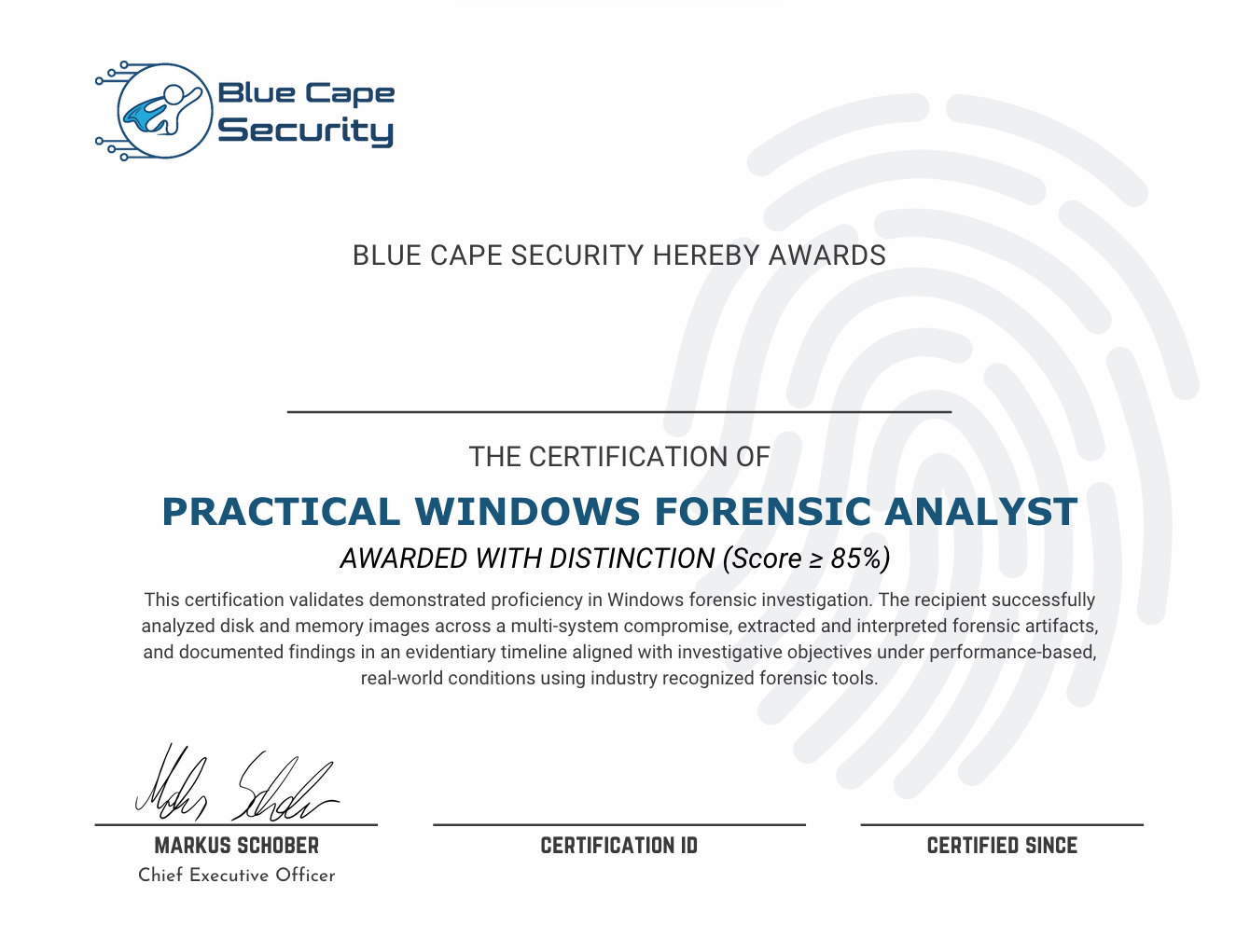
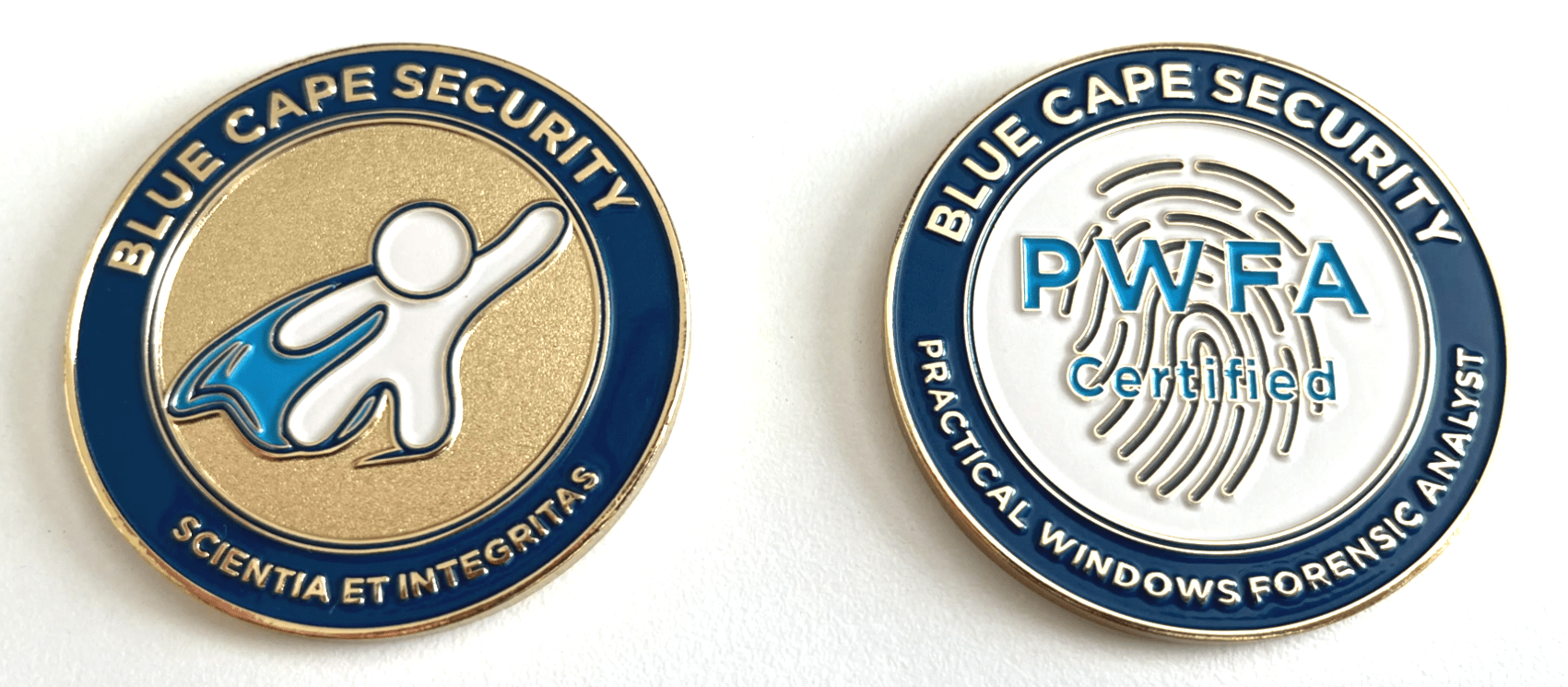
Every candidate who passes (scoring above 70%) earns a digital certificate that can be shared and verified. Those who demonstrate exceptional skill (scoring above 85%) also receive a limited-edition PWFA challenge coin shipped directly to them.
The PWFA challenge coin of excellency represents more than just passing a test. It’s a symbol that you approached a forensic case with the right mindset, followed objectives, and produced a professional-level investigation report.
How to Get Started
The PWFA certification is earned through the Analyst I track, which provides all the courses and scenarios you need to build the right foundation, and can be pursued in two ways:
- On-Demand Path: Learn and practice at your own pace, then attempt the exam when ready.
- Workshop Path: Join one of our live workshops for guided reinforcement, then move directly into the exam while the material is fresh.
Whether you prefer on-demand or workshop, the PWFA exam is your chance to validate your skills in a real-world setting.
👉 Learn more and start your PWFA journey at bluecapesecurity.com/pwfa